Commercial Construction

Adding Collaboration without Chaos: Designing Effective Workspaces

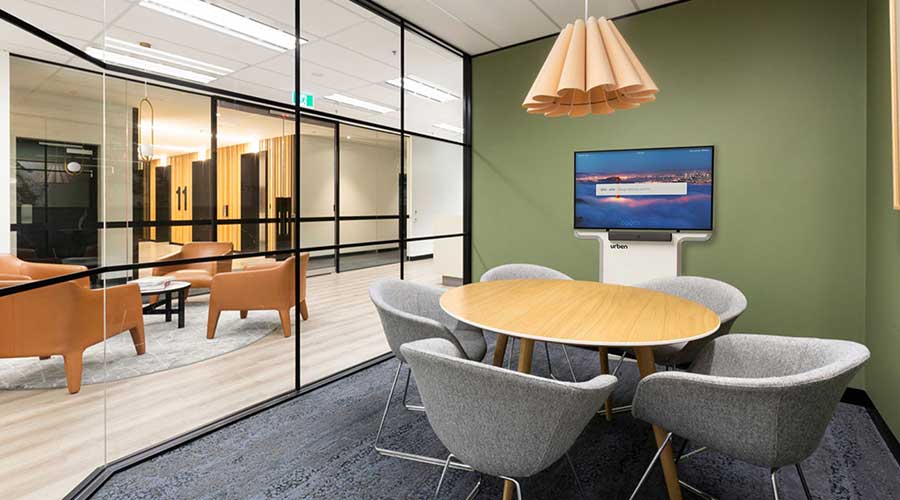
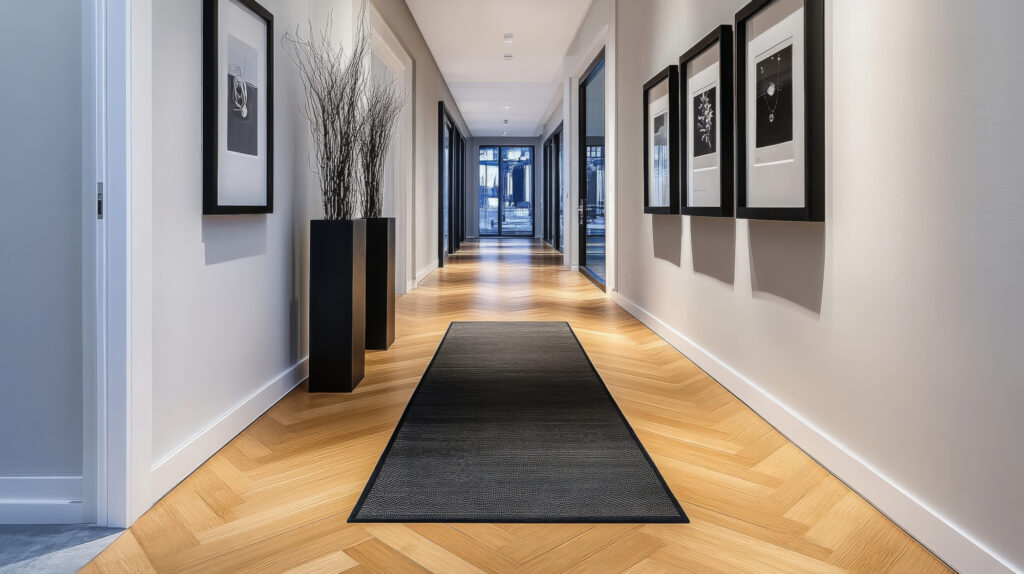
Sleek and Sophisticated Collaboration

Hybrid-Ready spaces

  • Built-in video conferencing spaces (not makeshift setups)
  • Flexible desks or hot-desking options for rotating schedules

Ready to Rethink Your Office Layout?


How to add calm to your executive office space

Biophilic Design

 biophilic design for adding calm to your office space - shows a waiting area with a large potted plant

Colors

Natural Textures

ACOUSTICS

EXTRAS

Other ideas for adding calm to your executive office space include:

Use lamps instead of overhead lighting to create a more muted and peaceful ambiance.

Consider an aromatherapy diffuser

A personal coffee bar and snack area

A separate sitting area for when the desk becomes too stifling. This can also be a great space for adding texture and plants too.

Finally, an area rug can make a not-so-cozy office feel much softer.

If you’re considering a commercial remodel project in Western Colorado or Utah, contact us! We’d love to help.

Lighting Considerations for Your Commercial Office Space

If you’re remodeling a commercial space or are considering a new commercial build, lighting will be a crucial part of your design decisions. Not only will you need to consider budget and aesthetics, but also various types of lighting for different spaces in your office.

First and foremost, consider the natural light your space will have and play into that. Natural light boosts productivity and increases mood. It also decreases eye strain. Using skylights, glass doors, and of course maximizing windows, can help to reduce electricity costs and improve employee health (less eye strain, for example).

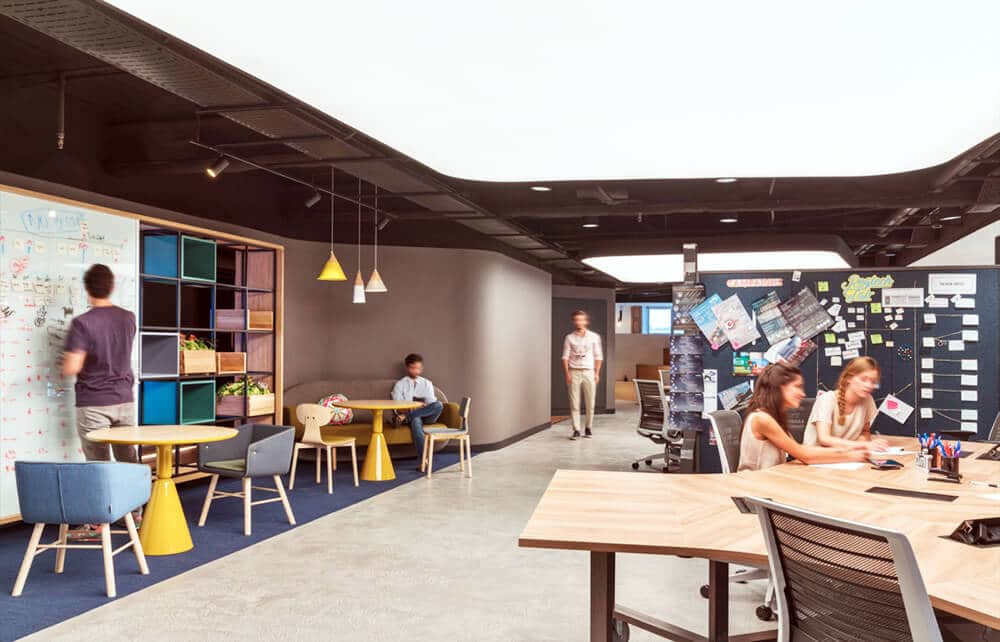
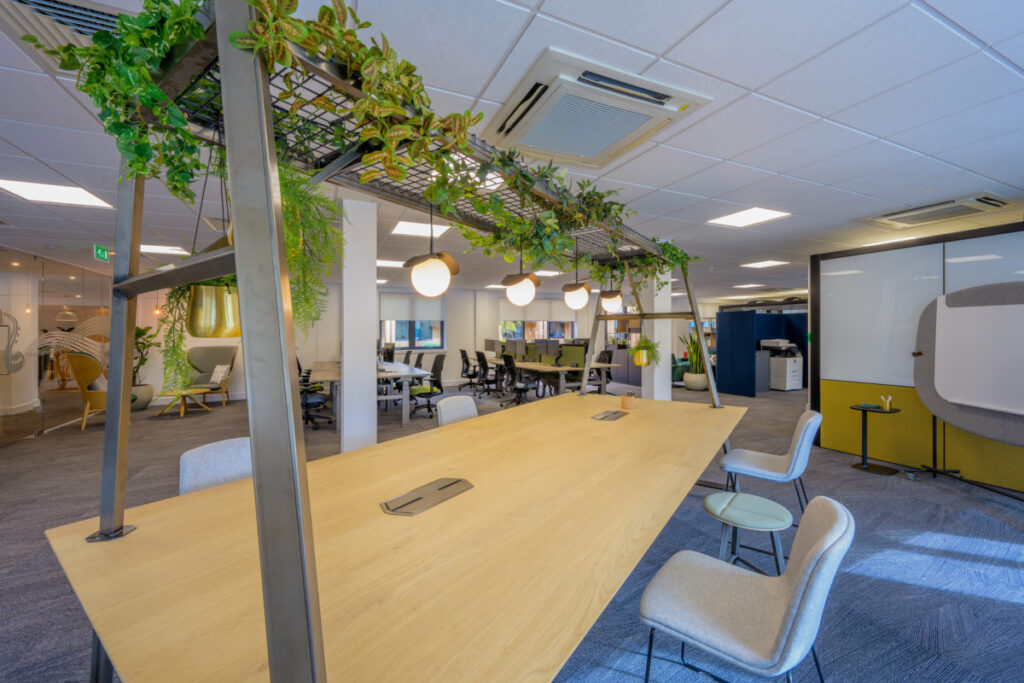
Interior shot of an open-plan office featuring modern design, natural light, tables, chairs, and plants, ideal for business and lifestyle visuals.

This commercial space takes advantage of natural light, but also includes pendant lights over the tables for added task lighting. Not only does this help with employee focus but it also adds style and character to the space.

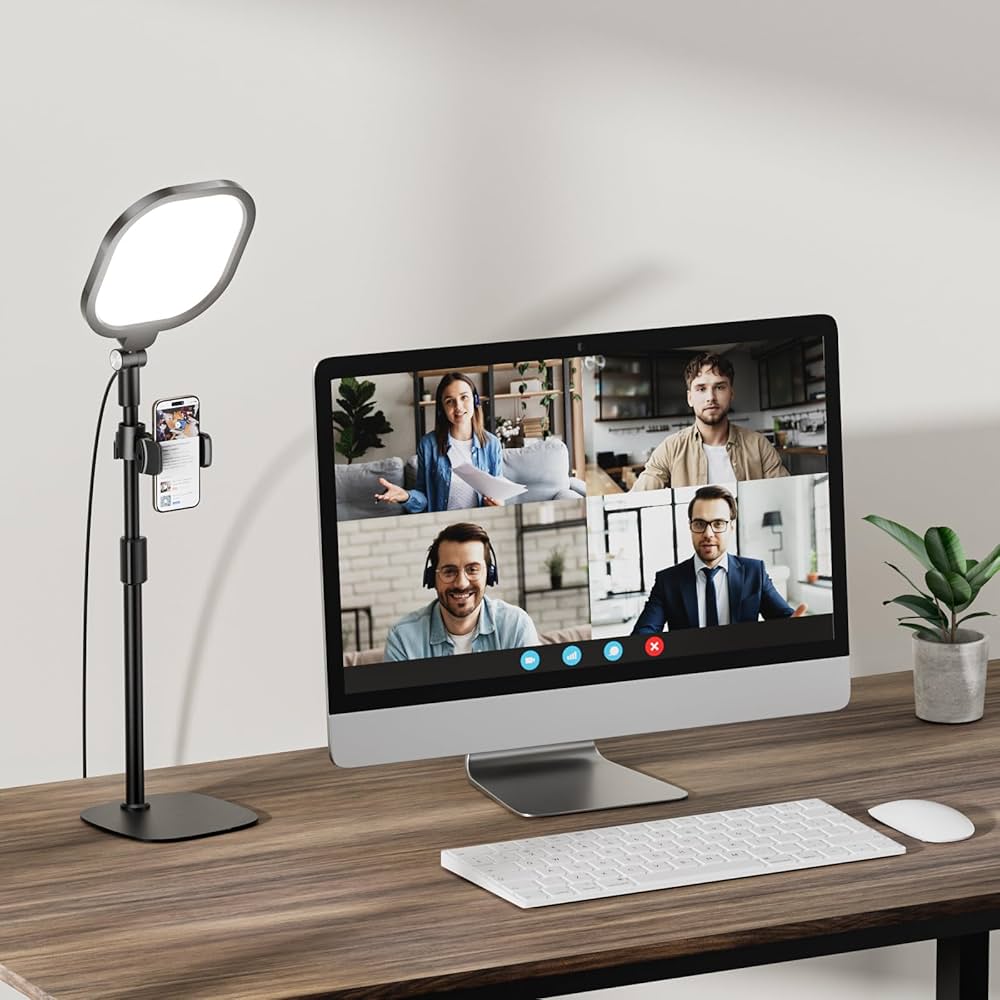
Productive tech-driven home office with daily focus layout, neat and clean –ar 125:83 –v 6.1 Job ID: 155f05b9-bf94-4b54-aa36-4797bcce9637

For smaller office spaces or personal offices, a similar mix of floor lamps, desk lamps, and natural light are best. Overhead lighting can be useful as well, especially if individual office overhead lights have a dimmer. Some people work better in brightly lit environments, while others prefer a calmer and slightly darker atmosphere. Having options for personalizing the lighting in one’s office will again keep your employees happier.

Finally, for the best in energy efficiency, stick with LED bulbs. They’ll provide reliable light in a variety of wattages and soft or bright light options, for all of your overhead and desk lighting.

Considering remodeling your commercial office space? We’d love to help! Contact us to get started.

Benefits of Planned Outdoor Space in your Commercial Construction Project

When designing your new commercial building project, it’s important to consider every aspect of design from energy efficiency to employee satisfaction and comfort. One area of commercial construction designs that has become increasingly important since the COVID pandemic is designing welcoming outdoor spaces for employees.

Why outdoor space?

While working from home during the height of the pandemic many employees had more access to sunshine and outdoor spaces than they do in a typical office setting. In order to meet emerging employee needs, adding this type of space in your office building is crucial. Let’s not forget the added benefits of vitamin D, stress relief and endorphin boosts that can come with spending time in nature!

Types of Planned Outdoor Space to Consider

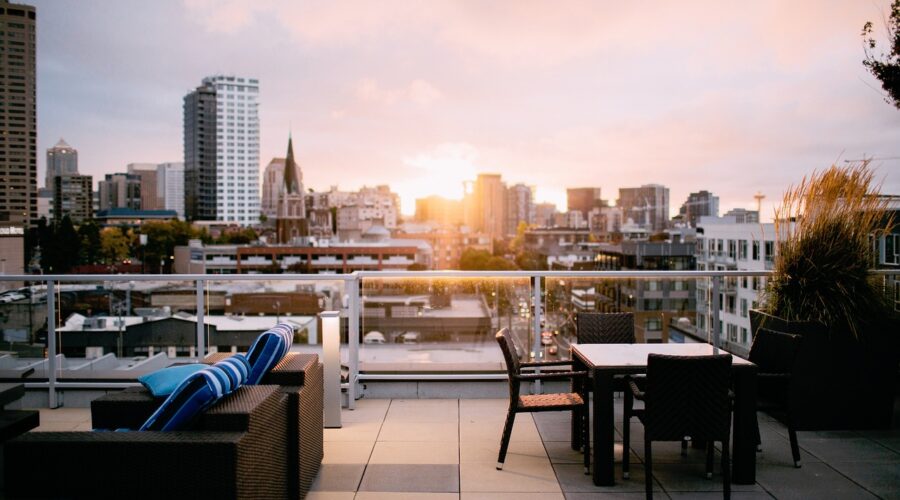
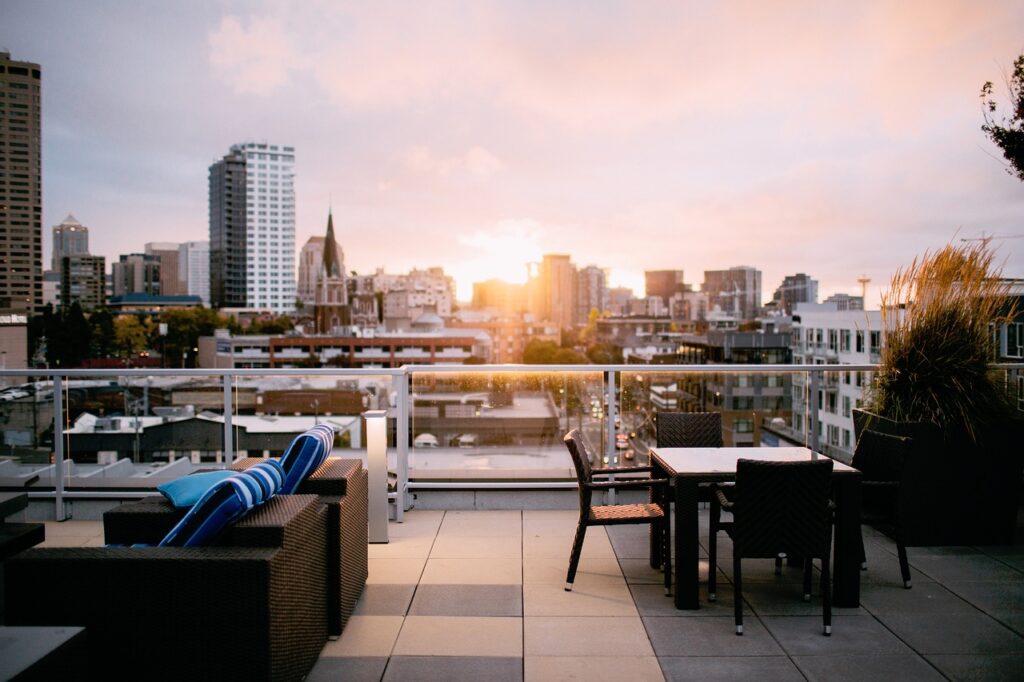
Rooftop gardens or workspaces are a great way to find outdoor space in the middle of a city.  Shade structures, covered areas in case of rain, and plentiful seating and greenery can make your employees feel at ease.

Sunrooms or solariums  are a great way to stay enclosed but provide that feeling of warmth, and a “conservatory” like feeling.  Filled with live plants and discreet, beautiful privacy screens, employees will feel comfortable taking a private call or brainstorming their next creative project here.

Courtyards are an excellent way to use space that is already available between buildings or off of alleyways.

Additions to consider

Be sure your outdoor space is WI-FI enabled and that the technology works well in the outdoor space.

If appropriate, set quiet hours for your outdoor spaces so that large meetings or casual gatherings don’t interrupt others’ workdays.

Water features will provide a peaceful backdrop and may bring birds to your outdoor space.

Live plants and foliage can also contribute not only to the beauty of your space but also to the natural world by providing pollen for bees and insects too.

If you’re ready to talk more about a commercial remodel and how to incorporate planned outdoor space in your commercial construction project, contact us.

Understanding the Pre-Construction Process

The first step, or set of steps, for any commercial, multi-family, or residential project, is the pre-construction process. During the pre-construction phase, before construction begins, much of the planning and essential work happens. 

Usually pre-construction meetings take place involving the owner, project manager, architect, general contractor, and project manager.  During these meetings the following are often discussed and decided on.

Defining the scope of work, Design/Development: including scheduling necessary tests (soil tests, for example) or pulling required permits, understanding the overall objectives of the project.

Costs and Schedule Management: This covers scheduling of subcontractors, estimated and actual costs, managing timelines for the project, and understanding risk management. 

Team Assembly is crucial to any good project: having a reliable team in place, including subcontractors, vendors, designers, and assistants, can make all the difference. 

Site Prep like getting an area graded and utilities set up, and setting up temporary offices, bathroom facilities, etc are the last step before a project actually begins. This means we’re ready to get started with the physical work of your new construction or remodel project! 

Design Build vs. Traditional: Which is right for you?

When it comes to bringing your commercial construction project to life, you have two basic methods to choose from: a traditional (design-bid-build) method or a design build method. Each has its benefits and drawbacks, and deciding which is the best way to go will be up to you and your individual preferences.

Design Build

A “design build” method means that your contractor is in charge of everything: the design and the build. At North Peak we use this method and work with our architects, subcontractors, vendors and the owner as a team, from the very beginning of the project.

With a design build, you’re trusting your contractor to choose all of those other aspects: vendors, architects, etc. You’re allowing the contract to have most of the control, leaving you to just relax and wait for your finished project!

For some, this lack of control can be unpleasant. While it can save time and streamline processes, if you want to be more involved in various aspects of your project, a traditional method might be better for you.

Traditional Build

With a traditional build, also called a design-bid-build, you will choose your architect first. Once your architect has designed your project you can then have contractors bid on your project.

This also means you will become the go-between and main communicator between the architect and general contractor. You’ll be in charge of making more decisions in regards to your commercial project.

Three Commercial Building Trends for 2025

Trends in commercial buildings come and go, and this year is no different. While some trends, like sustainable building, have stuck around for several years now, others, like Smart Buildings and Adaptive Reuse are just emerging.

First, “Sustainable Building” has been growing since the 1960s. The 1990s brought actual guidelines for “green” building standards. Since then the availability of projects and methods for creating commercial office buildings, neighborhood strip malls, and homes, has grown substantially.

Bamboo, cork, reclaimed wood, concrete, and adobe are all examples of sustainable building materials.

A second trend in commercial office design these days includes “in office benefits” for workers. These can range from something as simple as green plants to more complex options like an employee fitness center.

Providing incentives for employees, and ways to help them stay motivated helps you as their boss, but also helps your employees. Natural light, breakout spaces, quiet rooms, and quality office furniture are all ways to provide benefits to your staff.

It’s no surprise that “smart buildings” and the concept of “IoT” (The internet of things) are taking off. Smart buildings use Internet integration technology to program security cameras and thermostats, to improve workflow, and even to analyze data and productivity.

Energy efficiency is one of the top ways companies can use Smart Technology. By implementing simple changes in your design, like programmable thermostats, smart lighting, and even smart windows, companies can save money and help the environment.

If you’re considering a new commercial building, repurposing a current commercial property, or building a space that includes commercial and residential aspects, we’d love to help! Contact us at (970) 812-7970.

What is Adaptive Reuse?

In Grand Junction, Fruita, and towns all across the country, historic buildings and warehouse spaces often sit empty for years before being demolished to make room for new and modern buildings.
 
However, the idea of Adaptive Reuse is growing, and can be a way to preserve architecture while also saving businesses time and money.
 
 
Adaptive Reuse the process of remodeling a building for a use other than its originally intended one. For instance, the Lowell School (the old R5 school) was repurposed to house several businesses, including a brewery.
 
One of the benefits of Adaptive Reuse is that it preserves both architecture and heritage. No one wants to lose the great brickwork on an historic building, or the tin ceiling inside, for example. By repurposing the building instead of just tearing it down, businesses are able to highlight those historical features.
 
Another reason businesses might consider Adaptive Reuse is cost. Often it can be cheaper to restore / remodel a building than to build a new one.  Remodeling a structure can also be faster, which saves time and expense for owners too.
 
Elysium Studios is a tattoo studio in Fruita, Colorado whose space was a former church.
 
Some considerations for Adaptive Reuse include:
 
Structural assessments – you don’t want hidden or unexpected costs to arise. A structural assessment will ensure the building is sound and suitable for restoration or remodel.
 
Budget – Remember that, with any remodel project, unexected expenses will occur. Be prepared with an adequate budget and contingency fund.
 
Neighborhood – Is the potential project a good one for the neighborhood? Will it add value and fit in with other businesses in the area?
 
You’ll want to have a good contractor and team in place to take on your project; there will inevitably be areas that need to be brought up to code. Staircases and electrical wiring are two examples of areas that could require extra work to meet current codes.
 
If you’re interested in learning more about Adaptive Reuse, or have a project in mind, we’d love to talk to you! Contact us here.
 

The Topping Out Ceremony

In the construction world, the tradition of a Topping Out ceremony has been around for over 1,000 years. The event takes place when the final beam is raised on a structure, signaling that framing is done and it’s time to move on to making the shell a beautiful space for work or play. This celebration, which many say started in Scandanavia, served several purposes then.

First, it was a way to recognize and celebrate the framing of a new building. This was, and still is, an important milestone for any construction project.

Also, the northern Europeans, to appease the spirits who lived in the trees they cut down, would often attach a small pine tree to the top of the beam. It’s said that, when all the needles fell off the tree, the Scandinavians knew the building’s frame was dried out or cured. This meant they could enclose the structure.

While today’s topping out ceremonies don’t necessarily include offerings to tree-dwelling spirits, they are a great way to show appreciation for the project team, construction crew, stakeholders, and all involved in getting a building project to that important benchmark.

Often at the ceremony owners and project members will sign the beam before it is raised.

Once framing is complete it’s time to turn a shell into a building with walls, lights, and floors, where once there was just an idea and a blueprint.

Visit our GJ Blackout page to see more photos and articles from our recent Topping Out ceremony.

Sustainable Building Materials for your Commercial Construction Project

New building materials and technologies are making it possible for the construction industry to enter the world of sustainability with materials that are durable and better for the environment. The following materials are just a few that are making it easier to build strong, aesthetically-pleasing structures while considering environmental effects as well.

BAMBOO

Bamboo is a renewable “grass” that is strong and flexible. It regrows quickly, is durable, and can be used for framing, support, floors, and interior finishes. Because it grows so fast, up to 1.5 inches per hour, Bamboo is a quickly renewing, recyclable resource that works for many different facets of commercial construction design.

LAMINATED TIMBER

Laminated timber is an engineered wood product. It’s made by using an adhesive or glue to combine several pieces of lumber together. It is extremely strong; it’s stronger than standard lumber milled sawn wood.

It is more eco-friendly than steel or concrete and can be sued for everything from beams and columns to roofing and flooring. It is fire-resistant and water-resistant as well.

ADOBE BRICK

Adobe brick, made out of clay and straw, is naturally occurring and therefore a more sustainable choice than a manufactured product. It has wonderful insulating properties and can be a unique and good choice in arid areas. It has been used for centuries as a building material and can be recycled over and over.

STONE

Naturally existing stone is a great sustainable option for flooring, fireplaces, facades, entryways, and more! It is durable, strong and versatile. Adding stone to your project will not only ensure that you’re using available, existing natural resources, but also will give your building an added texture and feature.

CORK

Cork is a common building product in Europe. Slowly it is growing in popularity in the U.S. It comes from the cork oak tree and is removed by hand. This means it is renewable; trees are never cut down or killed in order to harvest cork.

It is mold-resistant as well and is often used in floors and walls. Because it it is water-resistant and durable, it can also be used for countertops and cabinets as well.

If you’re considering a commercial building project in Colorado this year, we’d love to help! Reach out to our Colorado commercial contractors today and let North Peak bring your building dreams to life!

Scroll to top